

Long time readers will remember that our investing strategy boils down to these four simple steps:
- Earn income
- Spend below our means
- Invest savings
- Increase our earnings-saving gap
What does spending below our means, or living below our means really signify? It simply means spending less than what we earn. One way to do that is to practice frugal living.
Practicing frugal living may seem harder than it sounds, especially with the cost of living on a steady climb thanks to inflation. For many people, it is getting harder and harder to keep expenses in check.
Are there ways to save money?
Thanks to today’s mentality of convenience, many of us have gone away from practicing time-tested frugal habits. Not only do these frugal habits save you money in the long run, they also often help us protect the environment.
Here are some frugal habits that I believe we should all practice to help us save both money and the environment.
1. Repair things, don’t replace them
Do you get the sense that things aren’t built to last for as long as they did a decade ago?
I sure do!
Many appliances and electronics are built to last a couple of years before they need to be replaced. Not only is buying-new-every-couple-of-years a costly habit, but it also creates a lot of unnecessary waste and increases a person’s carbon footprint.
Take our KitchenAid stand mixer for example. Last year in January, while mixing bread dough, the mixer arm stopped spinning. Then a few weeks later while making sausages, the mixer just wouldn’t spin. The motor worked but the arm would get stuck when there was a slight resistance.
When I contacted KitchenAid, I was told that the stand mixer typically only lasted about five years. If you consider the stand mixers cost about $500, that seems to be a lot of money to spend every five years or so.
As it turned out, the issue was caused by worn-down gear. After a bit of research, I was able to order the part from Amazon for $20 and fix it myself with only about 30 minutes of work.
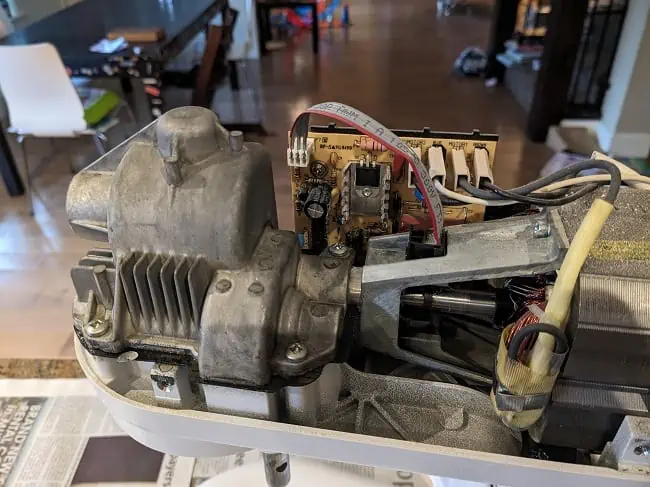
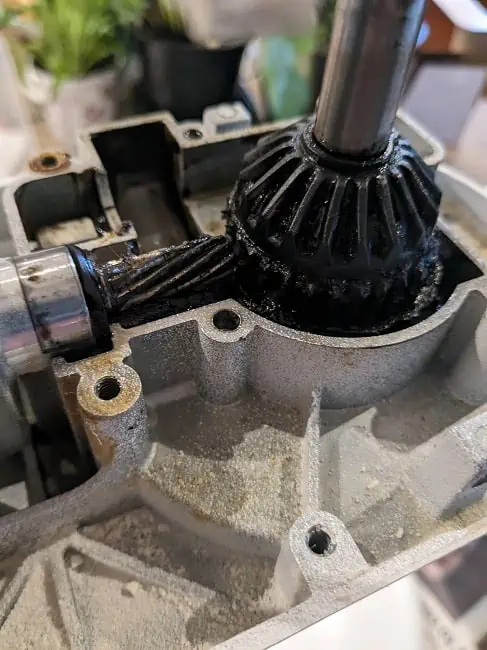
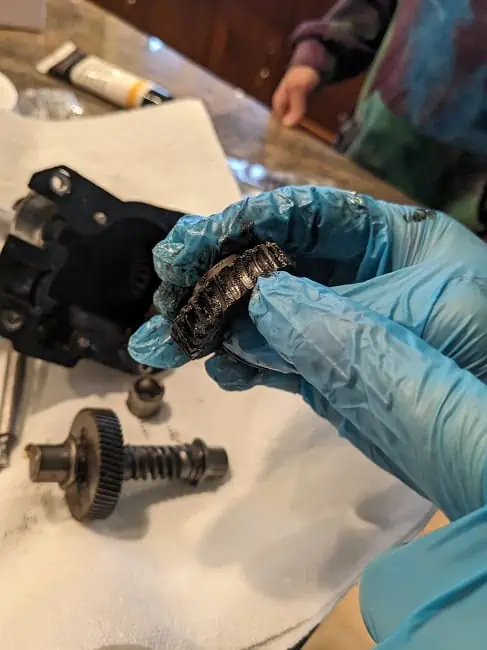
We not only avoided spending $500 for a new stand mixer, but we also avoided needing to throw out the old stand mixer, which would have created unnecessary electronic waste.
So if something breaks down, ask yourself – Can I fix it instead of replacing it with a new one?
You’ll be surprised that most of the time the answer is yes.
2. Grow your own food
We are very fortunate to have a good-sized backyard garden. Mrs. T is a bit sneaky in the sense that each year she expands the backyard garden slightly which allows us to grow more produce. On the other hand, it means we have less and less lawn.
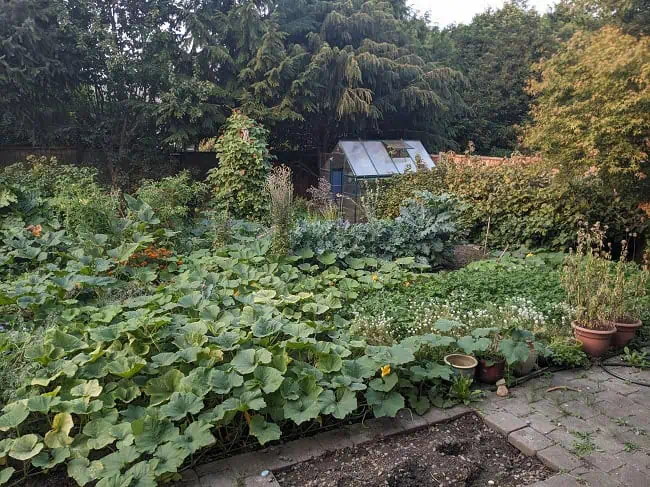

Although it costs money to buy seeds and plants, we do save money by growing our own food. The best part is that we know exactly where our food comes from and we get to enjoy the fruits of our labour. Furthermore, it is a good education for both kids to learn where food comes from and the work required to grow it.

Even if you don’t have a backyard, you can grow plants in planting pots and leave them on the balcony. Herbs, tomatoes, lettuce, and spinach can all be grown easily in a pot.
To reduce food waste, it is a good idea to preserve excess food by freezing or canning it so you can consume it later. We have many bags of frozen berries in the chest freezer in our garage. We also have many cans of pickled vegetables and jars of fruit jams in our pantry.
3. Walk and carpool more
Here in North America, we tend to drive everywhere, regardless of whether the place we’re going is close or not. I have seen people drive for less than five minutes to get to places.
One way to save money is to walk more. Walking is not only good exercise for our bodies as well as being beneficial for your pocket, it is also good for the environment.
Another good frugal habit to practice is to carpool more. If you have co-workers who live close by, why not consider carpooling to work? Carpooling can reduce traffic and pollution, it also allows you to use the HOV lane, potentially saving commute time.
4. Cook your own meals
Eating out and using food delivery services like Uber Eat and DoorDash are convenient but the cost can add up quickly. This is where cooking your meals at home is advantageous.
What are the key benefits of cooking your meals?
- It’s significantly cheaper than eating out or using food delivery services
- You get to decide the ingredients to use. You might even cook with organic food items if you want to
- You have control over salt and spice level, as well as the quantity of the meal itself.
- You can cook a large portion and eat the leftovers over a few days
- You can also use leftovers for other dishes, for example, using leftover turkey meat for sandwiches or soup
We probably cook 90 to 95% of our meals at home and eat out only once or twice a month. Thanks to this frugal practice, we have kept our grocery expenses comparatively low for a family of four. We also eat mostly organic to ensure we fuel our bodies in the best way possible.
5. Embrace second-hand or passed-down things
If you look at our kids’ clothes, about 85% of them are either second-hand or passed-down clothes. The crazy thing? A lot of the clothes looked completely new when we received them. Mrs. T and I also have many second-hand clothes in our closet.
There’s nothing wrong with wearing second-hand or passed-down clothes. They not only save money, they also help reduce your carbon footprint.
In addition to clothes, you can also buy used items like books, furniture, tools, or even electronics. You can often find excellent deals at garage or yard sales.
6. Sell items or donate them away rather than throwing them out
Similar to the previous point, if you have an item that you no longer need, it is a great idea to try to sell it or give it away instead of having it end up in a landfill.
There are a lot of online places where you can sell used items like Facebook’s Market Place, Craigslist, and eBay. You can also have a garage or yard sale and sell these used items. If you are thinking of a garage sale, my best tip is to organize one with your neighbours and advertise it so you can get as much traffic as possible.
If you fail to sell these items, you can donate them to local thrift stores so again you avoid throwing them out.
7. Focus on quality
When buying things, I often use price as the sole determining factor on whether I buy it or not. But using price as the sole buying decision is often a bad choice.
Instead, we should all focus on buying quality. If an item is of higher quality and can last longer, it is usually better to buy this item at a slightly higher price than buying a similar item at a lower cost but needing to replace it sooner. The old cliche, “You get what you pay for” is totally true.
Is it better to buy a pair of hiking boots for $25 that fall apart after a couple of hikes? Or is it better to buy a pair of hiking boots for $150 that last you for three years or more?
It’s easy to see that it is substantially better to buy the $150 hiking boots. Not only will they last longer, they will save you money in the long run, and once again, create much less of a carbon footprint.
8. Maximize the lifespan
Before you replace an item, ask yourself, are there ways to extend the lifespan of an item so you can avoid replacing it? It is typically cheaper to try to maximize the lifespan of an item.
When it comes to clothes, it can be easy to patch up elbow or knee holes to make them last longer. Alternatively, you can cut clothes into smaller pieces and use them as cleaning rags.
Rather than buying another car, can you maintain and repair your existing car to get another year or two out of it?
If your cellphone or laptop battery drains quickly, perhaps consider replacing the battery instead of buying a new phone or laptop.
We can all do better in improving the “throw away get a new one” mentality.
Summary – 8 frugal habits to practice
By practicing these 8 simple frugal habits, I truly believe one can save a lot of money in the long run. Furthermore, by reducing and reusing, you can reduce a lot of carbon footprint and help the environment. What’s not to like?
Always remember the three “R’s” – reduce, recycle, reuse!
Do you have any frugal habits that I may have missed?

Am not a gardener but bf is. But more a flower gardener, though he rented 2 community garden plots. Trying out some grapes, got lettuce but radishes were wierd. He comes from a farming and gardening family so it’s not totally new to him.
I’ve been car-free for over 40 yrs. of life. Since I lived in Vancouver for a few yrs., I can appreciate how much it’s easier for your family to walk a times. And that luxuriant garden of your wife’s! Fantastic.
CAr-free for over 40 years. That’s amazing!
Excellent advice Bob!
One more is to eat more vegetables and minimize our meat consumption for our health as well as our planet’s health!
Happy holidays and thank you for all of these wonderful insights and sharing!
Thank you Gd.
I once was able to replace the power plug on my Hoover vaccum and use it for many more years. Without checking, I would’ve spent another 300-400$ on a new Vaccum cleaner. I completely agree with you, they design all appliances with a life span of 3 years at the most. Obviously, wasting that money is a big issue but even bigger than that is the ecological impact of the waste that we generate through our consumeristic mindset. Sic!!
That’s a good point. We replaced the power plug on our vacuum a while ago too.
Is that your incredible garden? I agree your children learn lots by having a family garden.
I don’t think I could have easily bought and paid off my home if it weren’t for having a car-free life when living in Canada’s big 3 cities over the past 4 decades. I did calculate over a decade ago, that I would have saved and redirected over $300,000 (to ie. a home instead), for not owning a car and its costs for maintenance, insurance and fuel. I have used and owned 3 different bikes. Total cost of 3 bikes is very tiny and maintenance is just puny even if I pay bike mechanic every few yrs.
WE must remember that big cities also have carshare to rent a car for the day.
It does mean intentionally looking for and buying a home within 15 min. walk of transit, big park, some shops and services.
It helps alot to stay at a healthy weight and be fit….so one can still wear classic timeless clothing for over 10-20 years or more. In my retirement, fashion needs are under $500.00 annually. I still haven’t donated my clothing…because I still wear it (well some of it..). Alot of sports/active clothing is durable and still looks chic-active for casual wear.
Though not me, I know a close good friend who frequents thrift shops, some estate sales and has nicely decorated his home with 75% 2nd-hand furniture in tasteful design manner. Rest were old wood farm furniture he got from his grandparents. Beautiful wood chairs and little tables are now, in abundance at thrift shops since some folks don’t like such furniture. But make nice pieces with compatible Ikea pieces. It works. Trick is to find thrift shops in /near wealthy neighbourhoods where folks donate wonderful stuff. His specialty is real art where he has found real paintings and has resold higher. He has formal art degrees and teaches art.
The kids are learning a lot. They like to harvest thing but not so much with the hard work ha!
Staying healthy and fit to allow you to wear the same clothes rather than having to buy new clothes is another way to save money for sure.
Hi Tow, how are you, I hope you’re doing well.
I am a 72 years old retiree with my retired wife with low income. I would like to have your advice on solid Canadian aristocrat stocks with good returns.
Thanks
Al B.
Hi Al,
You may want to take a look here first – https://tawcan.com/best-canadian-dividend-stocks/
Grow your own food: Jerusalem artichoke -2½ kg, apples – 5 kg and the last 3 tomatoes from the greenhouse from the garden last weekend – va’ba’ !
Love it!
Hi Bob,
A great post.
I have saved thousands through fixing things. Sometimes it does not workout. However I do have more wins than not. It does make a difference at the end of the day.
The world tells us that we should outsource everything. It is a marketing ploy to separate us from our money.
I have also found success in optimizing my life in other areas.
Buying things that are on sale, parlaying deals and saving money frees up cash for investing.
It is amazing how many of my former co-workers live life in the present moment. It is painful to see that their lives are poorer in the latter stage of their lives.
I have yet to see the full fruit of all my investments. However the compounding magic is true. Warren Buffet gained most of his wealth after his 60’s.
Hi Mike,
Thank you. It’s amazing a little bit of work can save you quite a bit of money. Buying things that are on sale is another good tactic to save money. Compounding is very powerful, it just takes time.
Timely post Bob,
This weekend both our coffeemaker and dishwasher stopped working. The coffemaker was an easy fix as a sensor needed to be reset to turn off the automatic grinder. The dishwasher error code indicated it’s the heating element for the dry cycle. That part is on order and until it arrives we will dry the dishes by hand after the rinse cycle. A small inconvenience as normally the dishwasher runs overnight. BTW loved your post last week on when/when not to sell.
Thank you! Fixing things rather than buying new is always a good idea!
My biggest savings comes from not buying stuff I don’t need to begin with (e.g. reduce). There is so much stuff out there that really isn’t needed (e.g. yet another piece of clothing, specialized gadgets for kitchen/car/home, new electronics/tools/toys, etc). I got plenty of money but just don’t see the need for so much of this crap being marketed.
Totally agree with you. Quite often, you don’t need all these specialized tools.
Thank you for this timely reminder in the season of overconsumption! Nice job on the KitchenAid!
You’re welcome. I was surprised how easy it was to fix it.
You are an amazing family.
I do many of those things, and I as well, wish more people would follow this example.
Wishing you all a magical Christmas Season.
Thank you. Enjoy your Christmas season too.
The three Rs in order of effectiveness is actually reduce, reuse, recycle! Recycling is kind of a scam in which companies ship them off to developing countries where it’s just burned anyway… 🙁
That seems true for plastic it seems. We do better on recycling metals I believe. Agree that reduce is the number one key factor.
Awesome as usual. I practice all of those even though it’s not necessary anymore. I sure wish more people would follow your example. They’d be healthier, wealthier, and the environment would be better. And it also makes purchases of new things you want a special occasion and increases gratitude.
Looking forward to your next column.
Daryn
Thank you Daryn.